Dead End
Synopsis
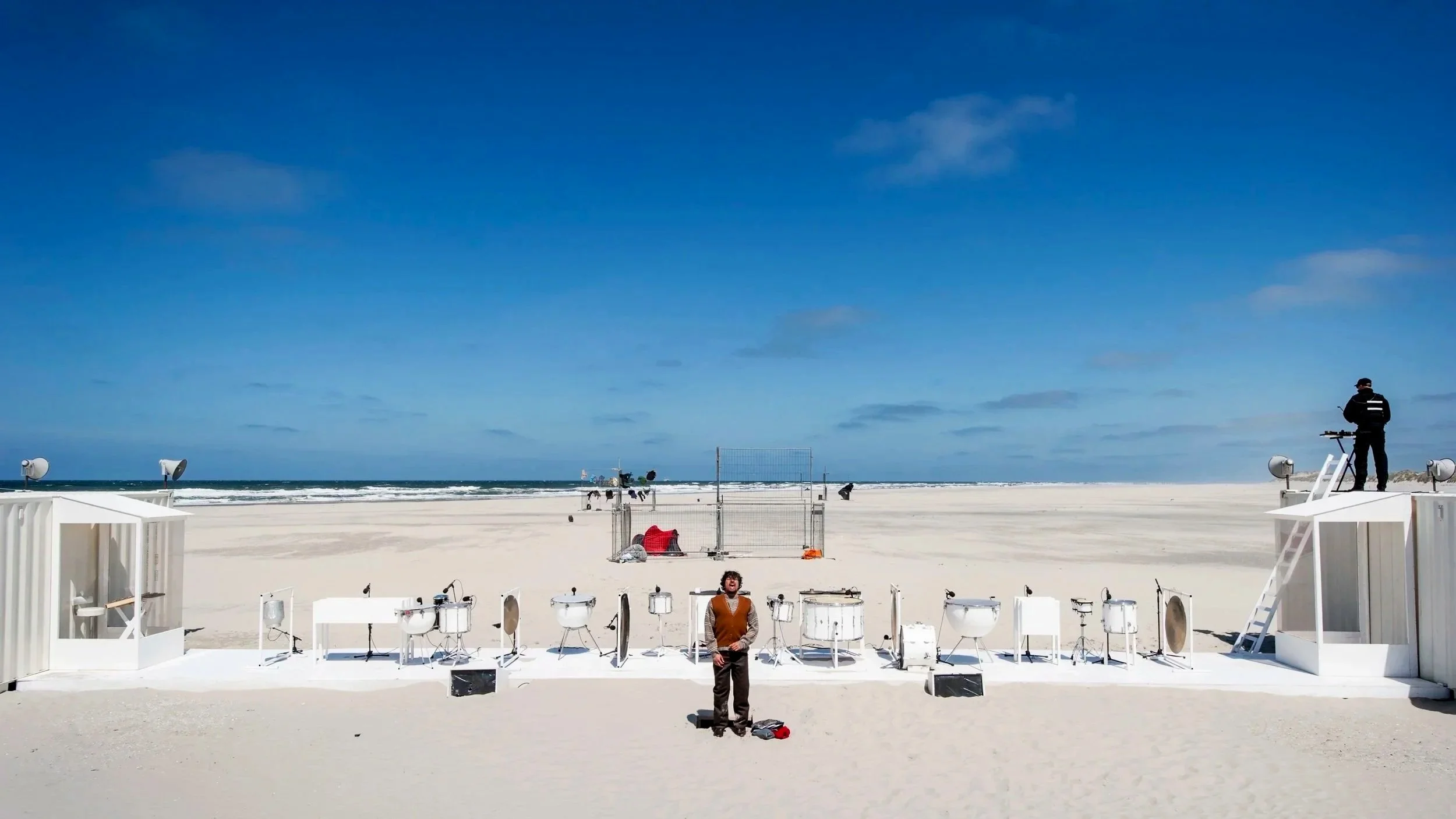
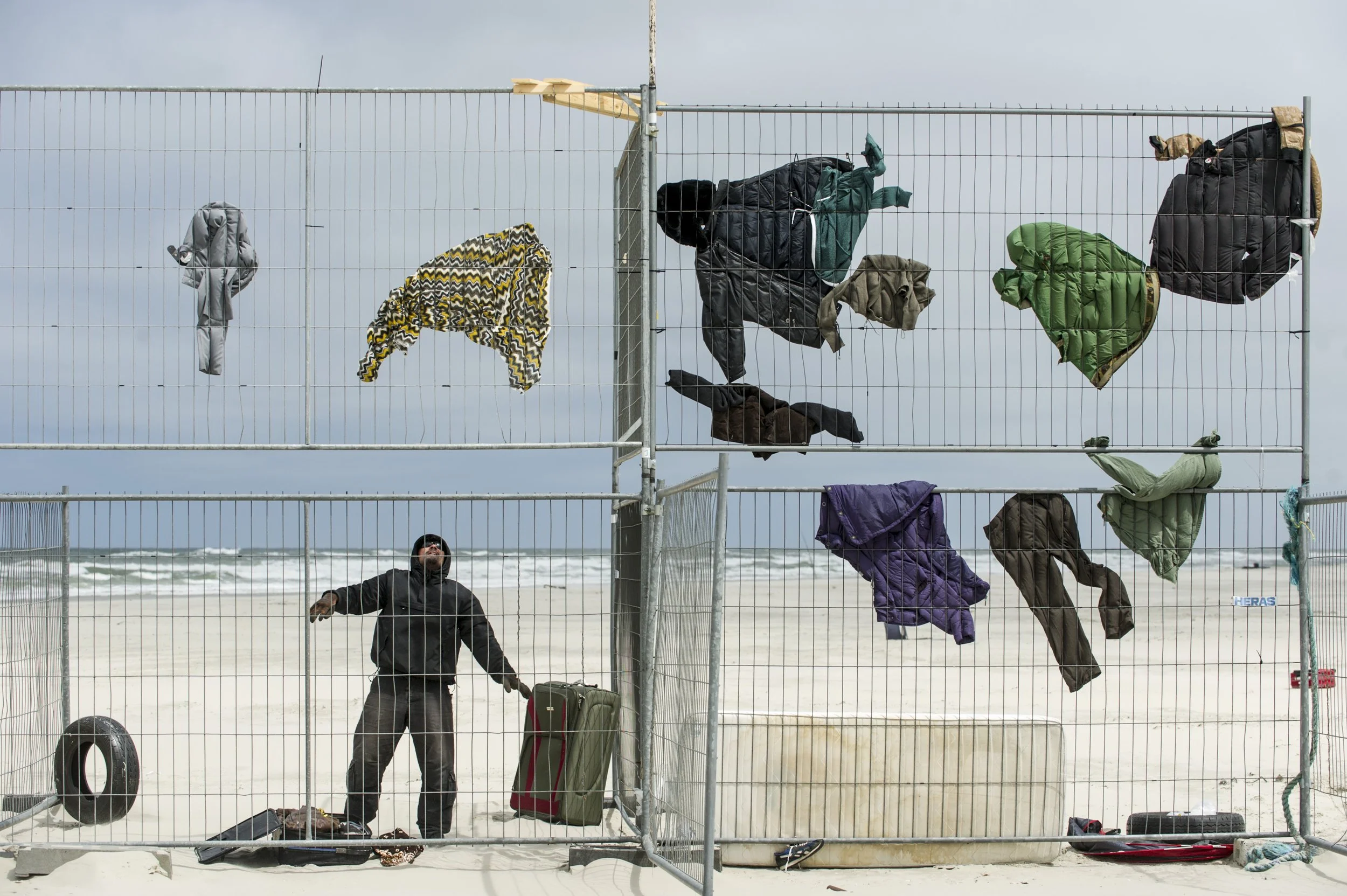
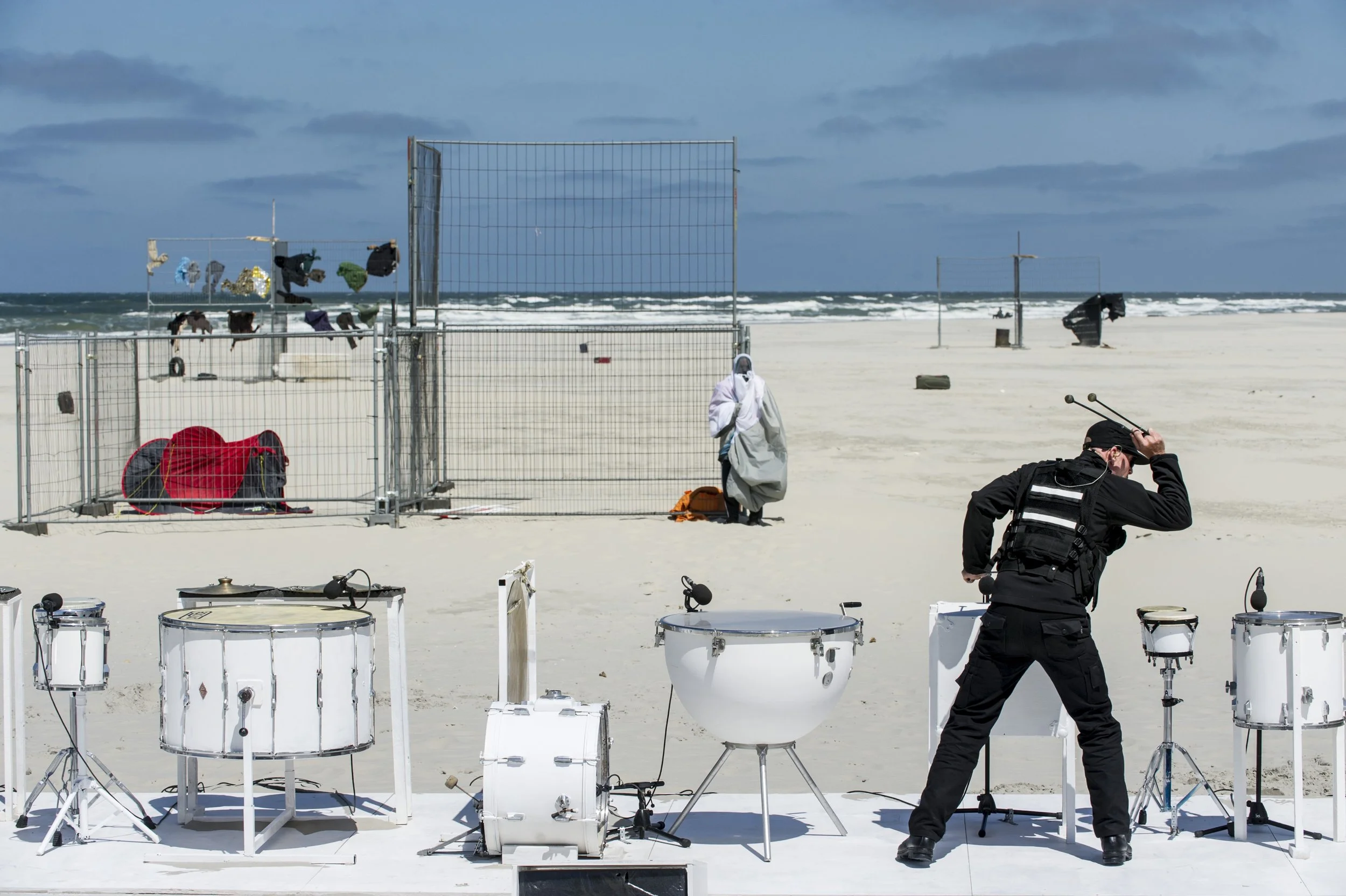
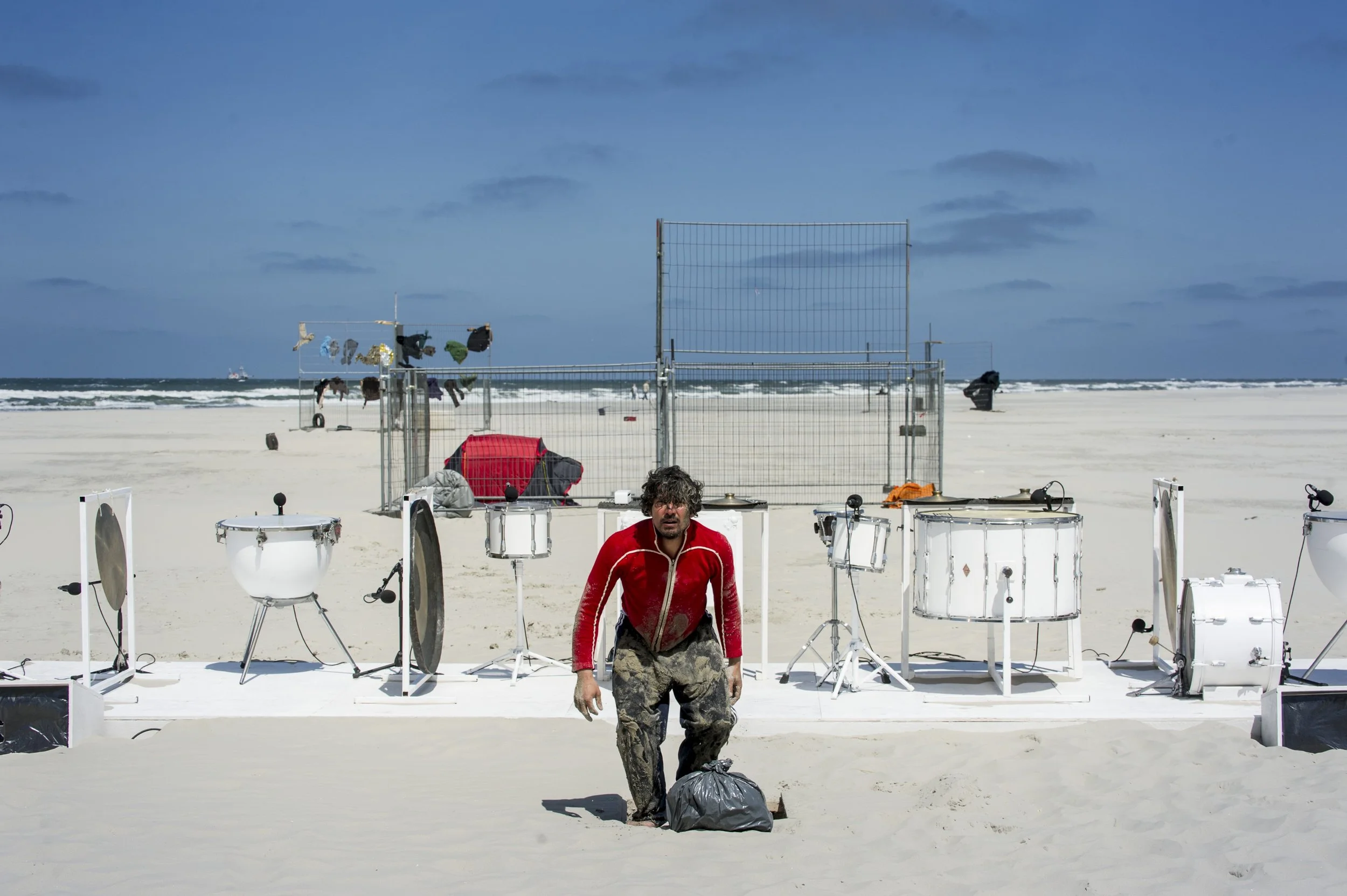
Safely positioned behind the border post on the vast beach, the audience watches the encounter between two men. One watches and waits on the shore; the other emerges from the sea. What follows is a bizarre confrontation between a border guard and a refugee, between the obligation to enforce strict rules and the longing for a safe haven.Sytze Pruiksma composed a theatrical concert for one man, one border guard, and a chorus of vultures behind them. Following Via Berlin’s trilogy centred on the overarching theme of war — Een mond vol zand, Vanaf nu heet je Pjotr and Home Sweet Home — which was awarded the Charlotte Köhler Prize in 2014, Via Berlin now embarks on a new theme: illegality. Dead End is the first part of this series. In September, it will be followed in the theatre by Comfortzone, a standalone sequel that can also be seen independently.
Dead End also marks Dagmar Slagmolen’s directorial debut at Via Berlin. She had previously directed numerous ensembles, ranging from small groups to large orchestras, but at Via Berlin she had always performed her own texts herself. For Dead End, Rosa and Dagmar felt it was time for Dagmar to take on the role of director and for the piece to be performed by men.Specially created for the international Oerol theater festival in 2015.



Reviews
“As he struggles his way over three enormous fences positioned across the beach, Sytze Pruiksma, dressed as a customs officer, performs a beautiful composition of his own on an extensive array of drums and percussion instruments.”— Het Parool
“A sharp and successful critique of immigration policy, using striking metaphors to portray the journey undertaken by refugees.”— Friesch Dagblad
“Visually powerful and compelling theatre that lingers in the mind long after.”— De Volkskrant
“Dead End is more than a beautiful musical and visual portrait. It is a production about xenophobia, evoking contemporary issues surrounding asylum policy and refugees who risk their lives making the crossing to Europe by boat. It is highly topical, expressed through a compelling theatrical and musical aesthetic.”— Theaterkrant